The Lab
03/03/2026

Anna Tombazzi
Research & Development
The "Arsenal of Democracy" has historically relied on a few specific, high-purity carbon sources to power its munitions and propellant chains. But as global supply chains become increasingly contested, the Department of Defense is looking for a way to turn domestic waste into a strategic win.
Enter DARPA FLEETWOOD.
Launched by the Biological Technologies Office (BTO), the FLEETWOOD program (Fractionation and Lagerstroemia Engineering for Enacted Transformation of Waste into Operational Outputs for Defense) represents a massive leap in how we view the chemical building blocks of national security.
For decades, lignin—the organic polymer that gives plants their structural rigidity—has been the "white whale" of industrial chemistry. It is the second most abundant terrestrial biopolymer on Earth, yet it is almost universally treated as a waste product. Because its molecular structure is so complex and irregular, it is notoriously difficult to "upcycle" into high-value materials.
DARPA is aiming to change that by using atomic-level precision to break down these complex chains into consistent, high-value precursors for:
The FLEETWOOD program isn't just a science project; it is a validation of the industrial shift toward Upstream Sovereignty.
At the core of the energetics bottleneck is a reliance on specific, often imported, fibers. By unlocking the chemistry of lignin, the DoD is creating a path where agricultural and forestry waste from the American heartland can be converted directly into the materials needed to defend it.
This mirrors the language found in the FY2026 Enacted Appropriations, which significantly increased funding for Defense Production Act (DPA) Title III programs aimed at domesticating the supply of precursors and advanced manufacturing materials.
Perhaps most importantly, DARPA is prioritizing modular production. The goal of FLEETWOOD is to create processing units that are small enough to be deployed near the source of the biomass.
This "distributed" approach is the antithesis of the 20th-century model of massive, centralized, and brittle chemical plants. It aligns perfectly with the move toward a resilient industrial base that can surge capacity without relying on a single point of failure.
The "factories of the future" won't just be defined by what they build, but by what they utilize. By turning biomass waste into a strategic material, DARPA is ensuring that the North American industrial base remains both sustainable and sovereign.
Read the full DARPA announcement here: https://www.darpa.mil/news/2026/upgrading-biomass-waste-into-strategic-materials

News
Our latest milestone reinforces our commitment to safeguarding UK data, mitigating digital risks, and maintaining the highest standards of cybersecurity.
10/08/2026
News
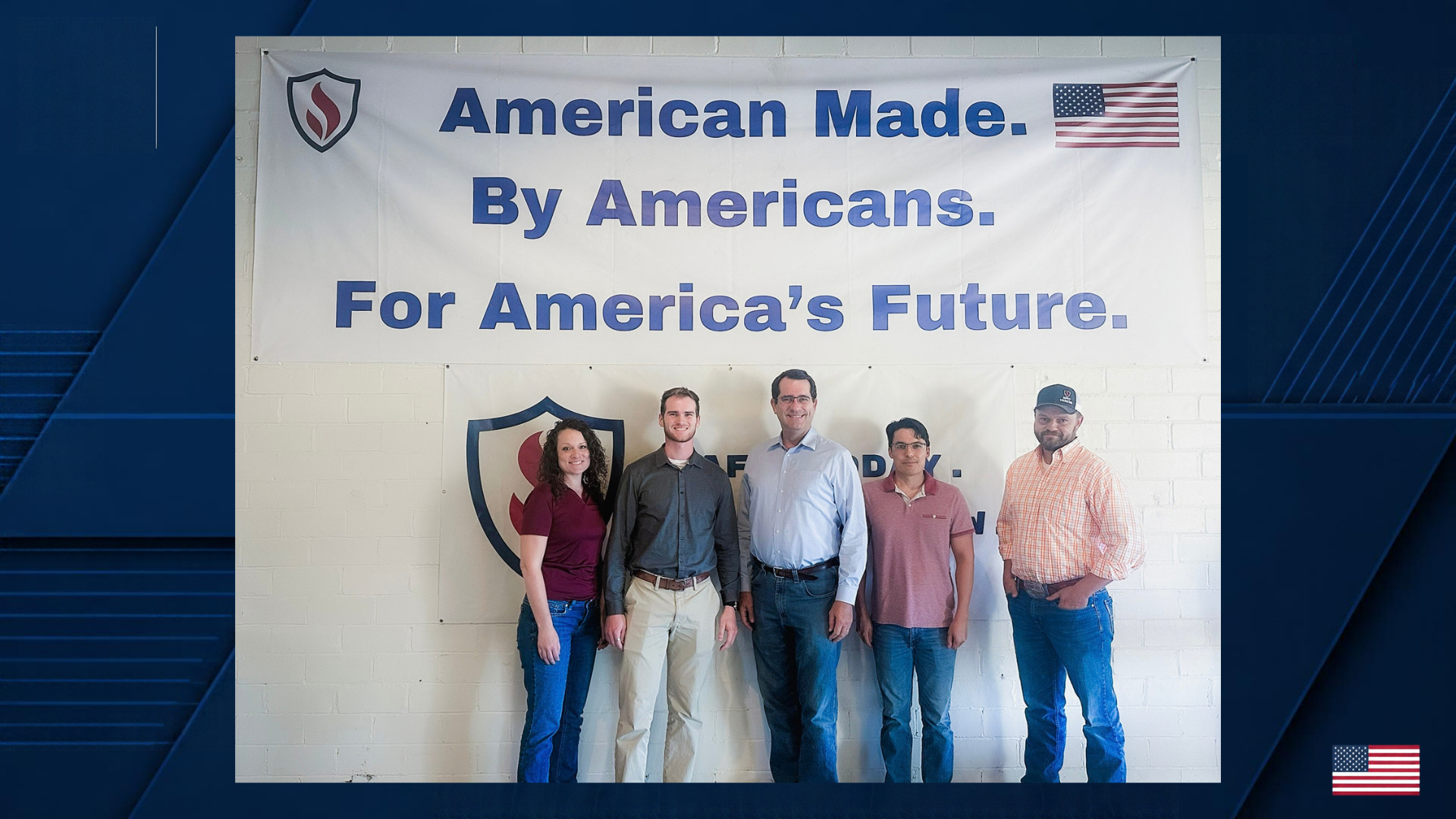
Supply Energetics recently hosted Congressman Derek Schmidt at our Parsons, Kansas facility to showcase our commitment to American-made manufacturing and local job growth. Read more about the visit.
10/07/2026

Intel
President Trump announced that 18 munition plants are currently under construction across the U.S. Here is a look at the key facility projects, missile integration plants, and artillery foundries scaling up production.
09/28/2026


Copyright © 2026 Supply Energetics All Rights Reserved.
Discover
Copyright © 2026 Supply Energetics All Rights Reserved.



 Contact Us