Spotlight
12/12/2025

Jason Nichols
Case Studies In OTS Businesses
Follow along here with our series on vertical integration in the OTS Sector.
In our previous post, we looked at General Dynamics, a company that achieved dominance by buying commercial assets and owning the dirt under their feet.
Today, we turn to BAE Systems, a giant that has taken the exact opposite path. They don't own the land. They don't own the buildings. They don't even own the machinery. Yet, they control the single most critical choke points in the US high-explosives supply chain.
This is the story of the Government-Owned, Contractor-Operated (GOCO) model, and how BAE Systems utilized intellectual property to transform themselves from a mere "landlord" into the architect of the Army's future firepower.
The US Army owns massive ammunition plants—legacies of World War II—that are too large, dangerous, and strategic to shut down, but too complex for the military to run themselves. Instead, they hire private contractors to operate them.
For years, this was seen as a low-margin, service-based business. You just kept the lights on.
BAE Systems flipped the script. They recognized that while the facilities belong to the government, the chemistry that happens inside them can be proprietary. By securing the operating contracts for the two most critical chemical facilities in the US, BAE effectively cornered the market on high-performance military explosives.
BAE Systems currently operates the only two active Army ammunition plants capable of synthesizing explosives and propellants:
The risk of the GOCO model is that the government can fire you (just ask ATK). To prevent this, BAE Systems invested heavily in Intellectual Property (IP).
They didn't just cook the Army's recipes; they invented better ones.
The prime example is IMX-101 (Insensitive Munitions Explosive).
Perhaps the most brilliant aspect of BAE’s strategy is the capital structure. Unlike General Dynamics, which must use its own profits to upgrade St. Marks Powder, BAE utilizes government funding to modernize the plants they operate.
At Radford alone, the Army is funding a massive modernization effort, including a new "Alternate Nitrate Ester Manufacturing Facility." BAE gets to operate a brand-new, state-of-the-art chemical plant without carrying the depreciation on their own balance sheet. They leverage the government's capital to build capacity that they then profit from operating.
The BAE Systems case study offers a critical nuance to our vertical integration strategy: Ownership is not just about physical assets; it is about Process Authority.
We do not necessarily need to own every square foot of real estate to be a platform company. If we control the Intellectual Property (like unique NC formulations or proprietary propellant recipes) and the Operational Expertise, we become indispensable to the end-user.
BAE proves that if you solve the customer's hardest technical problems (like safety and stability), they will build the factory for you.
Next Up: We move from the "Old Guard" to the "Disruptor." We will analyze D&M Holdings, the company that looked at this landscape and decided to build their own path to solve the "Primer Crisis."
News
Our latest milestone reinforces our commitment to safeguarding UK data, mitigating digital risks, and maintaining the highest standards of cybersecurity.
10/08/2026
News
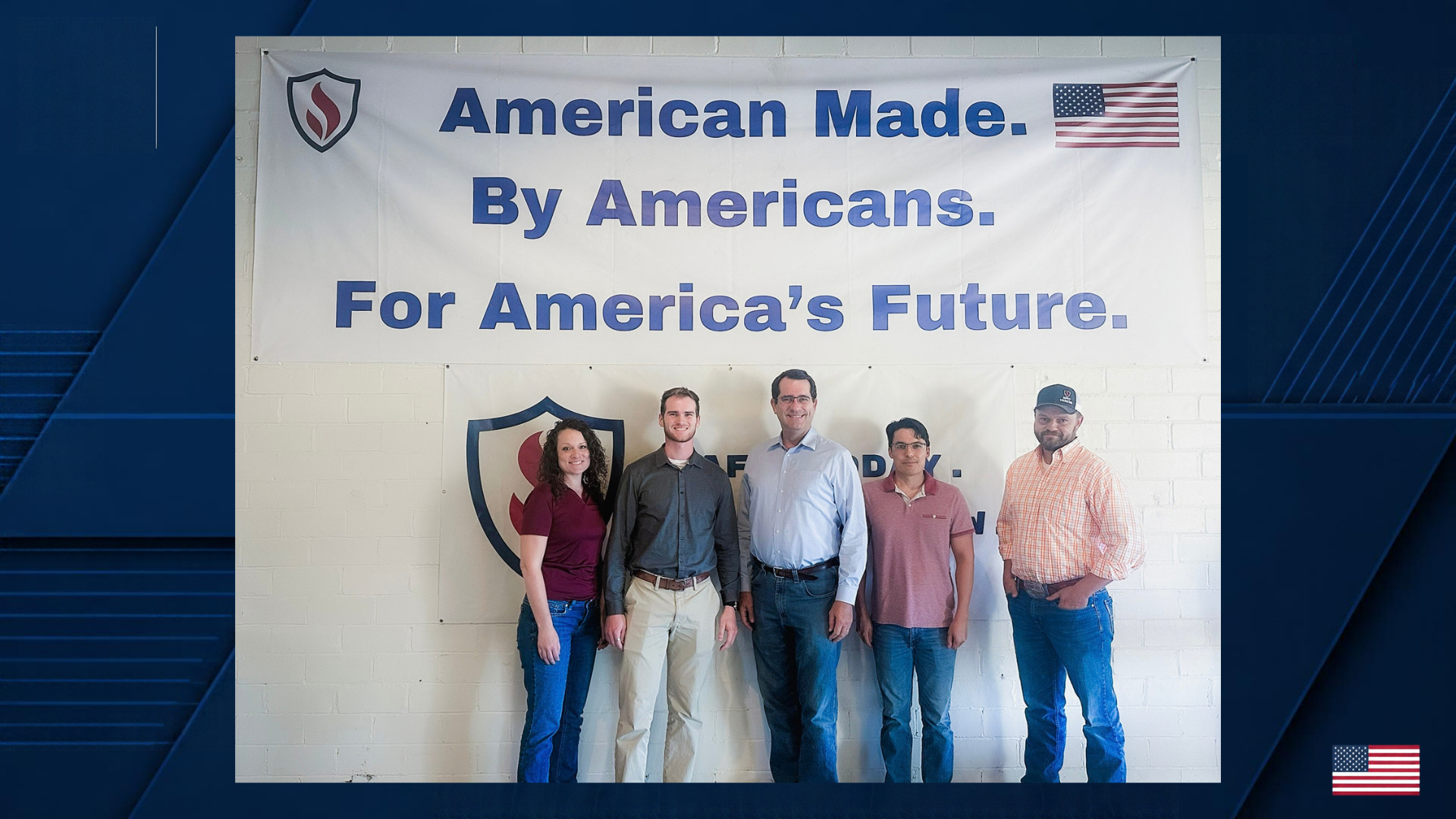
Supply Energetics recently hosted Congressman Derek Schmidt at our Parsons, Kansas facility to showcase our commitment to American-made manufacturing and local job growth. Read more about the visit.
10/07/2026

Intel
President Trump announced that 18 munition plants are currently under construction across the U.S. Here is a look at the key facility projects, missile integration plants, and artillery foundries scaling up production.
09/28/2026


Copyright © 2026 Supply Energetics All Rights Reserved.
Discover
Copyright © 2026 Supply Energetics All Rights Reserved.



 Contact Us