Spotlight
12/15/2025

Jeff Brothers
Case Studies In OTS Businesses
Follow along here with our series on vertical integration in the OTS Sector.
So far, we have looked at the "Old Guard": General Dynamics, who bought their way to dominance, and BAE Systems, who manage the government’s massive legacy infrastructure. Both rely on facilities built during World War II.
But what happens when those World War II facilities can’t keep up? What happens when the entire US commercial market is brought to its knees by a shortage of primers and powder?
Enter D&M Holdings. Founded in 2018, D&M is the "Disruptor" in this narrative. They didn't wait for a government contract or an acquisition target. They looked at the broken supply chain and decided to build the solution themselves.
D&M Holdings, led by industry veterans Dan Powers (formerly of Sig Sauer) and James Jones, started with a unique business model: The Turnkey Factory.
Instead of guarding their manufacturing secrets, they monetized them. They designed and built modern ammunition factories for clients around the world—from restoring Ukraine’s ammunition capacity to building infrastructure in Saudi Arabia. This generated the cash flow and the engineering muscle needed for their boldest move yet: coming home to fix the US supply chain.
In 2020-2022, the US ammunition market faced a catastrophic bottleneck. It wasn't a lack of brass or lead; it was a lack of Primers—the tiny, explosive caps that ignite the round. The few domestic producers (largely controlled by the "Old Guard") could not meet demand.
D&M’s subsidiary, White River Energetics (WRE), based in Des Arc, Arkansas, stepped into the void.
By solving the primer shortage, D&M didn’t just make a product; they unlocked the production lines of every other manufacturer who was stuck waiting for parts.
If the story stopped at primers, D&M would be a successful component supplier. But they are becoming a Platform Company.
In September 2024, White River Energetics announced a massive $60 million expansion to build a smokeless propellant factory on their Arkansas campus.
Building a factory is risky if you don't have customers. D&M de-risked their massive capital investment by partnering with Palmetto State Armory (PSA) to create the American Ammunition Company (AAC).
This is a master class in vertical integration:
They bypassed the entire traditional distribution network and the legacy prime contractors. They created a self-sustaining ecosystem that is immune to the allocation games played by the big giants.
D&M Holdings is the most relevant case study for our immediate future.
Unlike General Dynamics (who had billions to buy Primex), D&M used commercial agility to identify a gap (the shortage of energetics) and filled it with greenfield capacity.
They proved that you don't need a 50-year-old government plant to compete. If you control the Energetics (Primers + Powder), you control the destiny of the finished round. For a Nitrocellulose producer like us, D&M is the proof of concept: the market is desperate for a new, independent source of propellant, and the rewards for building it are massive.
Next Up: We wrap up our series by looking at the giants of logistics—Day & Zimmermann and Olin Winchester. We will explore how these massive "Loaders" are hungry for independent supply chains, and where we fit into their picture.
News
Our latest milestone reinforces our commitment to safeguarding UK data, mitigating digital risks, and maintaining the highest standards of cybersecurity.
10/08/2026
News
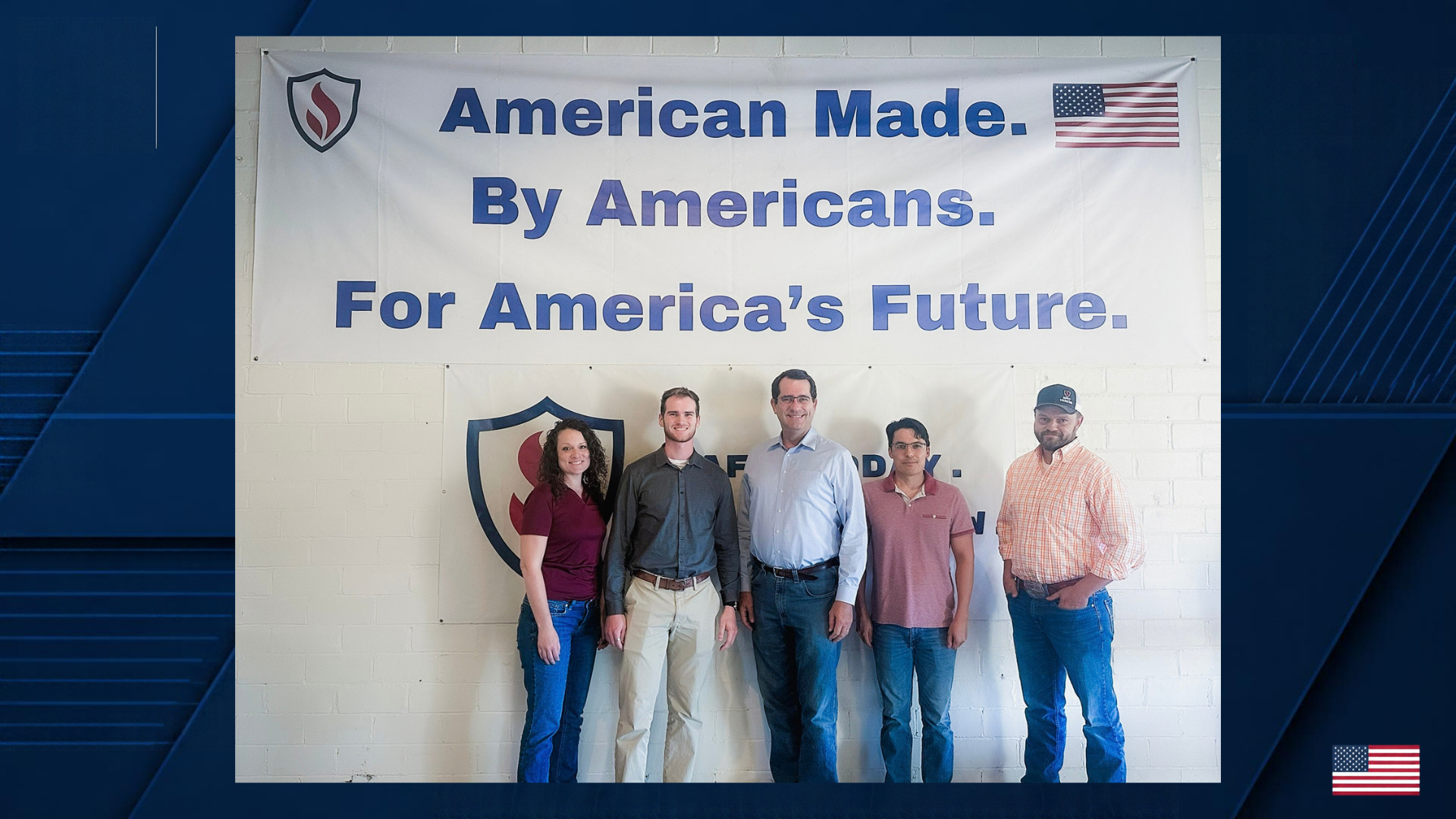
Supply Energetics recently hosted Congressman Derek Schmidt at our Parsons, Kansas facility to showcase our commitment to American-made manufacturing and local job growth. Read more about the visit.
10/07/2026

Intel
President Trump announced that 18 munition plants are currently under construction across the U.S. Here is a look at the key facility projects, missile integration plants, and artillery foundries scaling up production.
09/28/2026


Copyright © 2026 Supply Energetics All Rights Reserved.
Discover
Copyright © 2026 Supply Energetics All Rights Reserved.



 Contact Us