Spotlight
12/13/2025

Anna Tombazzi
Case Studies In OTS Businesses
Follow along here with our series on vertical integration in the OTS Sector.
In the defense industry, there is a distinct line between those who build the Platform (the tank, the jet, the ship) and those who build the Effector (the shell, the missile, the bullet). For decades, General Dynamics (GD) was firmly a Platform company. They built the F-16 (originally), the M1 Abrams tank, and the nuclear submarines that define American power.
But in the late 1990s, GD leadership recognized a strategic vulnerability: Platforms are low-volume, high-cost, and infrequent purchases. Effectors are high-volume, recurring, and consumable.
To capture the recurring revenue of the "consumable" market, GD didn't just buy an ammunition factory; they executed a master class in vertical integration that transformed them from a gun manufacturer into a systems hedgemon. This is the story of how they did it, and why the acquisition of Primex Technologies is the blueprint we are studying.
By 1997, General Dynamics had acquired Lockheed Martin Armament Systems. This gave them ownership of the "Shooter"-specifically, the iconic M61 Vulcan cannon (used on nearly every US fighter jet) and the GAU-19 heavy machine gun.
However, they had a problem. They made the gun, but they had to buy the ammunition from competitors (like Olin or Alliant Techsystems). They were capturing the low-margin metal bending of the gun barrel but missing the high-margin, high-turnover recurring revenue of the ammunition that fed it.
They needed to own the "bang."
In January 2001, General Dynamics closed the acquisition of Primex Technologies for approximately $520 million (cash plus assumed debt).
On paper, Primex was an ordnance manufacturer spun out of Olin Corporation. But strategically, Primex was the "Missing Middle" of the supply chain. By acquiring Primex, GD secured two non-negotiable assets that allowed them to ascend the value chain:
Primex owned the St. Marks Powder facility in Crawfordville, Florida.
Primex also possessed advanced warhead design capabilities in Niceville, Florida. This allowed GD to move beyond "dumb" iron bombs. They could now design the Shaped Charges and Blast Fragmentation warheads that are the "lethal payload" of sophisticated missiles.
GD didn't stop at the chemical layer. To become a true "Systems Integrator," they needed to control the mechanical hardware that housed the explosives.
In 2012, they acquired the defense operations of Gayston Corporation.
They no longer just assemble parts from suppliers; they are the supply chain.
Today, this strategy has matured into the Combat Systems segment of General Dynamics, which generated nearly $9.0 Billion in revenue in 2024.
While they are famous for the Abrams tank, a massive portion of that revenue-and an even larger portion of the profit margin-comes from the OTS division churning out propellants, projectile metal parts, and finished rounds. They have successfully decoupled their fortune from the "boom and bust" cycle of new vehicle contracts by securing the steady "consumable" stream of munitions.
The lesson from General Dynamics is clear: You cannot be a Systems Integrator if you are dependent on your competitors for the energetic material.
GD-OTS became a giant because they secured the Propellant First (Primex/St. Marks) and then built the mechanical structure around it. As we look at our own roadmap, our focus on Nitrocellulose and propellant manufacturing is not just about selling chemicals—it is the foundational move that grants us the "license to operate" as a higher-tier platform company.
News
Our latest milestone reinforces our commitment to safeguarding UK data, mitigating digital risks, and maintaining the highest standards of cybersecurity.
10/08/2026
News
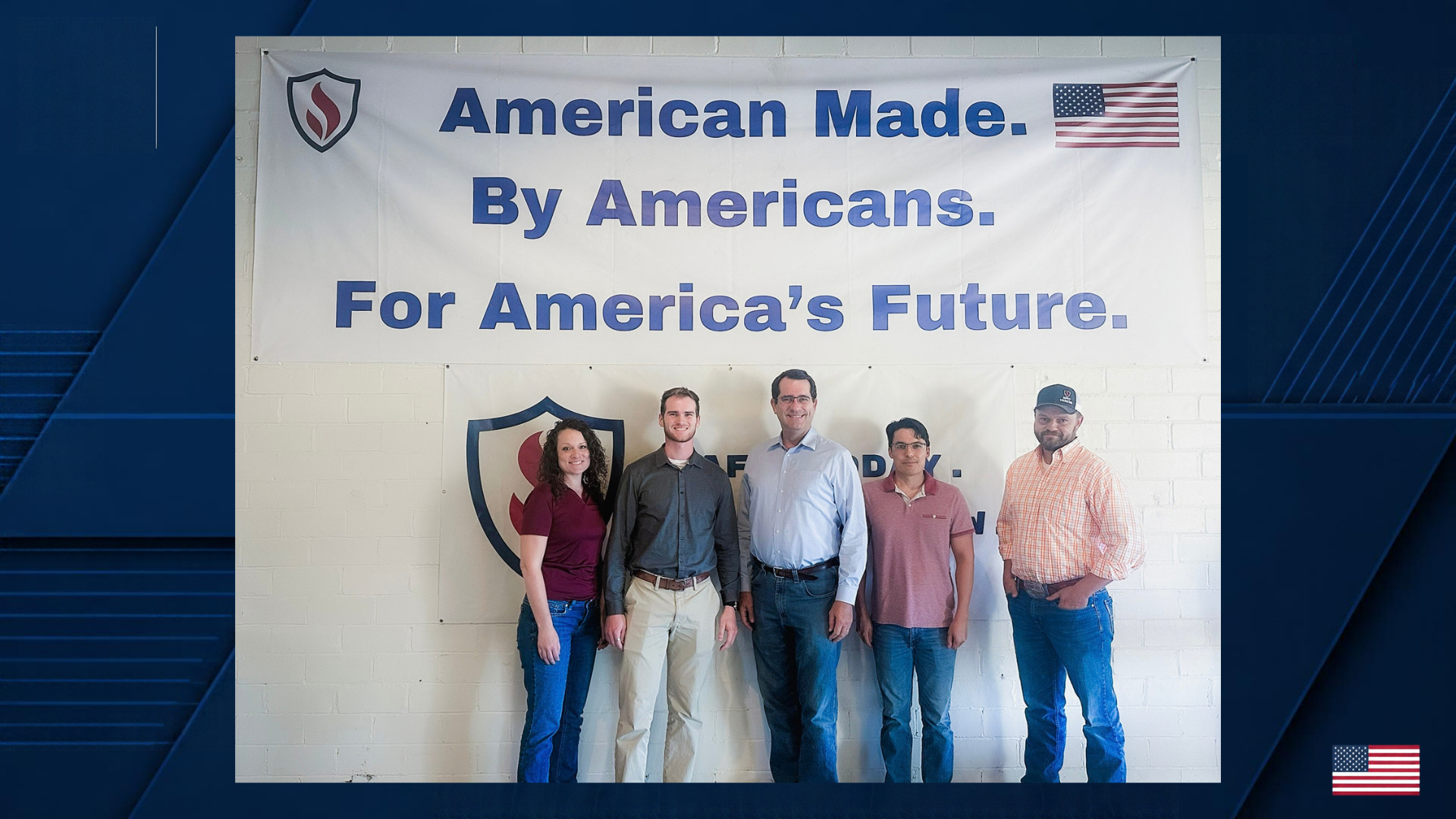
Supply Energetics recently hosted Congressman Derek Schmidt at our Parsons, Kansas facility to showcase our commitment to American-made manufacturing and local job growth. Read more about the visit.
10/07/2026

Intel
President Trump announced that 18 munition plants are currently under construction across the U.S. Here is a look at the key facility projects, missile integration plants, and artillery foundries scaling up production.
09/28/2026


Copyright © 2026 Supply Energetics All Rights Reserved.
Discover
Copyright © 2026 Supply Energetics All Rights Reserved.



 Contact Us