Spotlight
12/17/2025

Jeff Brothers
Case Studies In OTS Businesses
We conclude our series with a name that needs no introduction: Winchester.
Owned by the Olin Corporation, Winchester is unique among the giants we have studied. They are not just a defense contractor hiding behind barbed wire fences; they are a consumer brand found on the shelves of every Walmart and sporting goods store in America.
This dual identity-Commercial Retailer and Military Logistician-creates one of the most powerful business models in the industry. But it also hides a massive strategic irony: Olin is a chemical giant that lost control of its most critical chemical supply chain.
If Day & Zimmermann rules the "Heavy" side of the market (artillery/tanks), Olin Winchester rules the "Light" side.
Since 2020, Winchester has held the operating contract for the Lake City Army Ammunition Plant (LCAAP) in Independence, Missouri.
Winchester’s management of Lake City is defined by a brilliant mechanism known as the "White Box" model.
The government owns the plant, but the contract allows Winchester to use "excess capacity" to manufacture ammunition for the civilian market.
Despite this massive volume, Olin Winchester has a glaring vulnerability. To make those billions of rounds, they need billions of grains of Ball Powder propellant.
Here lies the irony:
Every time Winchester loads a round at Lake City, they are effectively writing a check to General Dynamics.
For a Nitrocellulose producer, Olin Winchester represents the "Holy Grail" of customers.
Olin Winchester is the ultimate proof that the market is "short" on independent propellant capacity. They have the loaders, they have the brass, they have the primers (via their own expansion), but they are missing the powder.
News
Our latest milestone reinforces our commitment to safeguarding UK data, mitigating digital risks, and maintaining the highest standards of cybersecurity.
10/08/2026
News
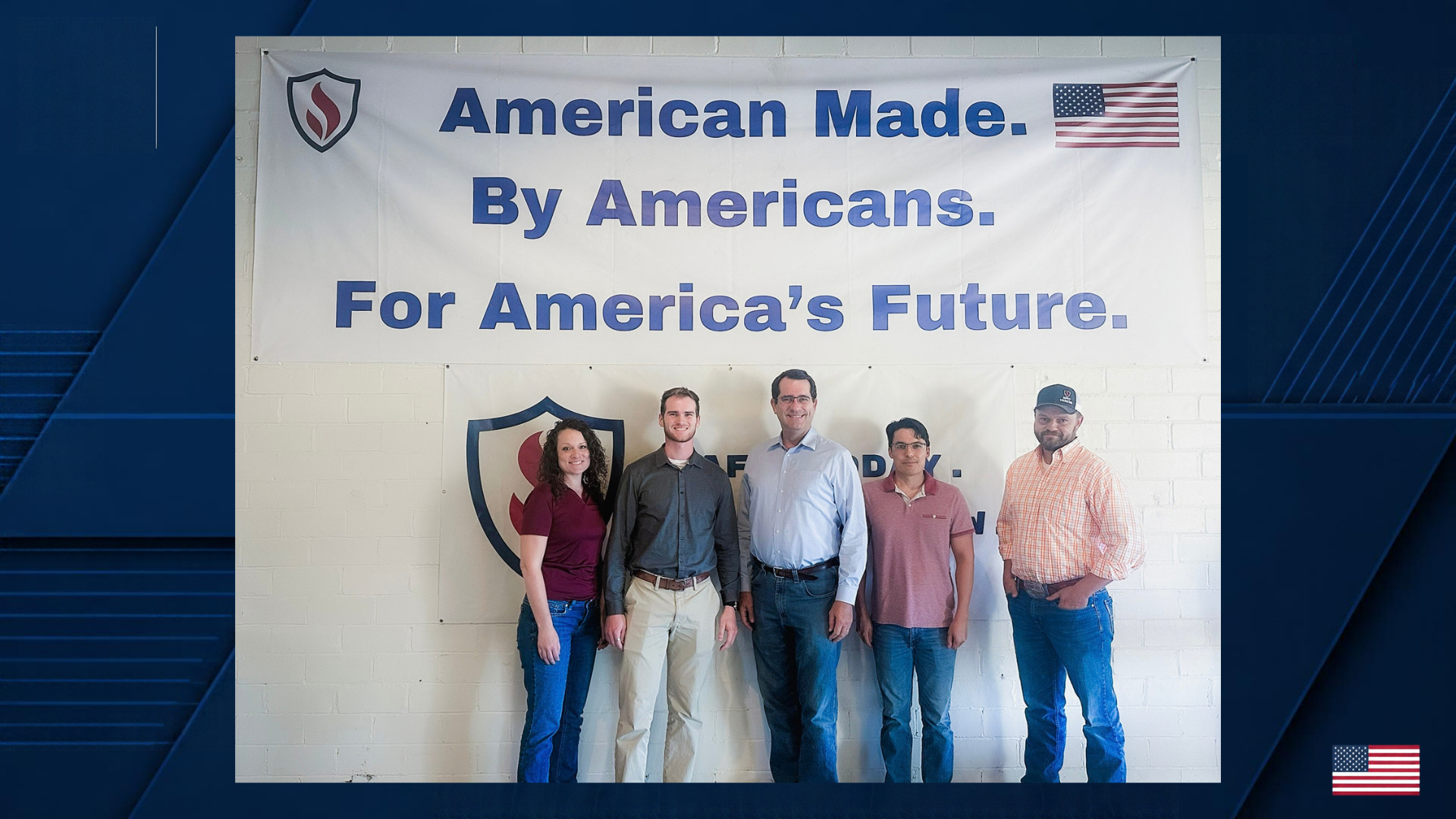
Supply Energetics recently hosted Congressman Derek Schmidt at our Parsons, Kansas facility to showcase our commitment to American-made manufacturing and local job growth. Read more about the visit.
10/07/2026

Intel
President Trump announced that 18 munition plants are currently under construction across the U.S. Here is a look at the key facility projects, missile integration plants, and artillery foundries scaling up production.
09/28/2026


Copyright © 2026 Supply Energetics All Rights Reserved.
Discover
Copyright © 2026 Supply Energetics All Rights Reserved.



 Contact Us