News
04/06/2026

Eliot Pence
Global Defense Resilience
For decades, the North American defense industrial base has operated under a paradoxical supply chain. Canada, one of the world’s leading producers of wood pulp-the foundational feedstock for Nitrocellulose (NC)-has historically exported its raw materials only to import them back as finished energetic propellant.
That cycle of dependency is now coming to an end.
The $1.4 Billion Commitment The Canadian government recently announced a massive $1.4 billion investment package aimed at reshoring its munitions supply chain. Central to this initiative is a $355.7 million award to General Dynamics Ordnance and Tactical Systems (GD-OTS) to establish a domestic Nitrocellulose manufacturing facility in Valleyfield, Quebec.
This move is a direct response to the global 155mm artillery shell bottleneck, where the lack of propellant has frequently stalled NATO’s ability to meet urgent mission requirements.
Strategic Sovereignty Nitrocellulose is the "heartbeat" of modern munitions. By securing a domestic "Wood-to-Weapon" pipeline, Canada is moving beyond the "just-in-time" logistics model that has left many Allied nations vulnerable to foreign export restrictions and shipping disruptions. This investment ensures that the critical precursors for defense are born, bred, and processed on American and Canadian soil.
The Path Forward At Supply Energetics, we view Canada’s pivot as a vital validation of our core mission. True national security is inseparable from industrial sovereignty. Whether through centralized hubs like the new facility in Valleyfield or the modular, agile "Resilience Hubs" we are deploying across the United States, the goal remains the same: ensuring the warfighter never faces a propellant shortage.
Canada has placed a significant marker on the board. In the race to secure the Allied energetic supply chain, domestic production is no longer just an economic advantage-it is a strategic necessity.
News
Our latest milestone reinforces our commitment to safeguarding UK data, mitigating digital risks, and maintaining the highest standards of cybersecurity.
10/08/2026
News
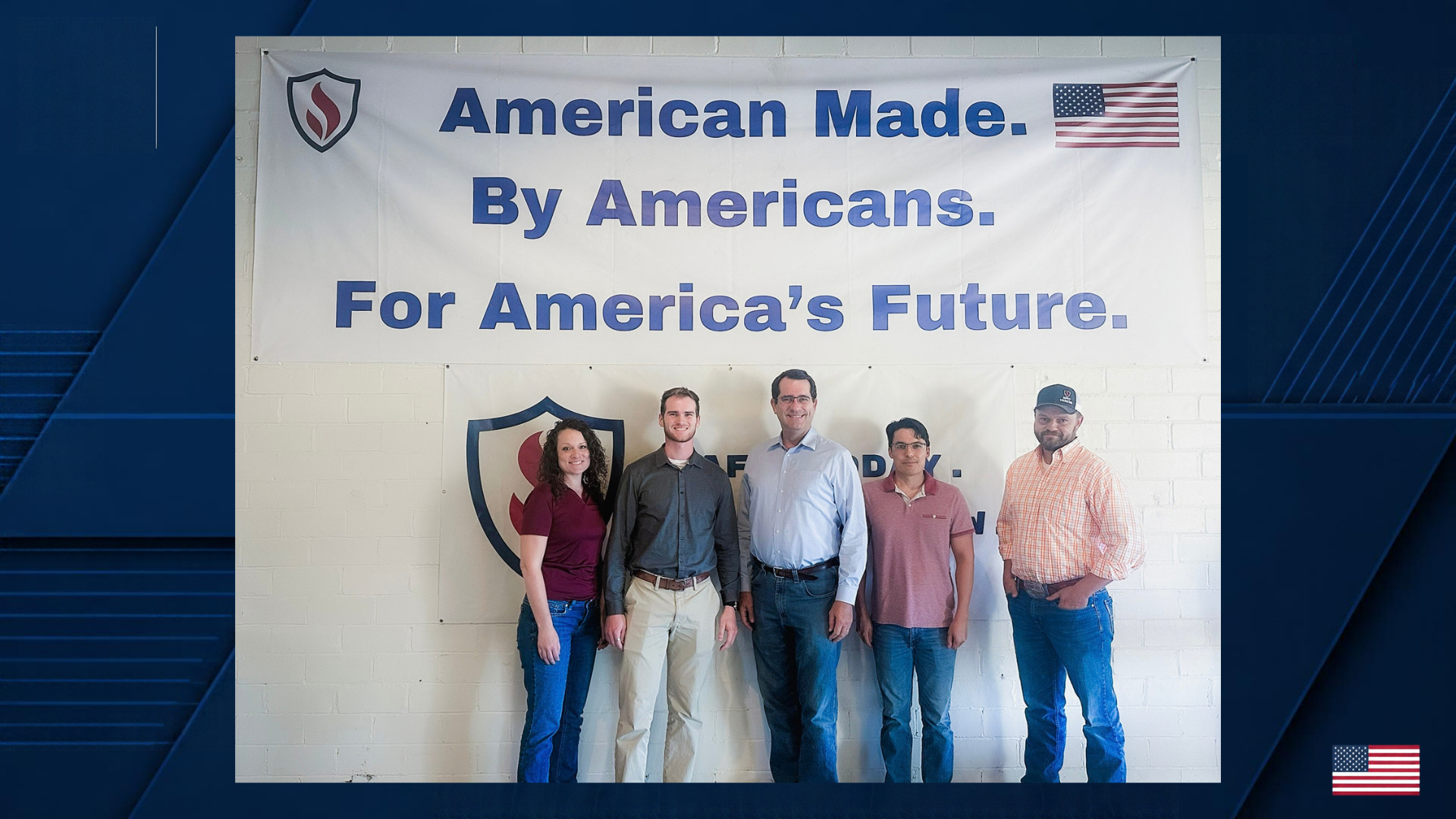
Supply Energetics recently hosted Congressman Derek Schmidt at our Parsons, Kansas facility to showcase our commitment to American-made manufacturing and local job growth. Read more about the visit.
10/07/2026

Intel
President Trump announced that 18 munition plants are currently under construction across the U.S. Here is a look at the key facility projects, missile integration plants, and artillery foundries scaling up production.
09/28/2026


Copyright © 2026 Supply Energetics All Rights Reserved.
Discover
Copyright © 2026 Supply Energetics All Rights Reserved.



 Contact Us