The Lab
08/03/2026

Anna Tombazzi
Behold the NACSAC
If you’ve ever driven past an explosives or defense energetics facility, your eyes were probably drawn to the sky. Looming high over the plant floor stand massive, silver-and-glass distillation towers-soaring 100+ feet into the air.
To the untrained eye, they look like generic industrial smokestacks. But to a chemical engineer, those giants represent one of the hardest-fought technological victories in industrial history: NACSAC (Nitric Acid Concentration & Sulfuric Acid Concentration).
Without these towers, modern fertilizer production, pharmaceutical synthesis, and defense energetic manufacturing (TNT, RDX, Nitrocellulose) would grind to a complete halt. Here is the story of how three centuries of beer brewing, world wars, and materials science built the modern acid recovery plant.
To make energetic materials, factories react organic molecules with hyper-concentrated nitric acid (HNO3). Concentrated sulfuric acid (SO4) is added as a dehydrating agent to force the chemical reaction forward.
There’s just one catch: the reaction creates water.
As water accumulates, it dilutes the acid mixture, halting nitration. What’s left behind is millions of gallons of hazardous, weak "spent acid." You can’t throw it away (it causes environmental ruin and wastes vast capital), and you can’t reuse it weak.
To keep the plant running, you have to continually strip out the water, recover the nitric acid vapor, and reconcentrate the sulfuric acid back up to 98% The problem? Boiling, concentrated acids destroy almost every standard metal on Earth.
In the 18th and early 19th centuries, chemical plants handled acids using heavy sheet-lead vessels or fragile ceramic pots. Lead resisted weak sulfuric acid, but high temperatures and concentrated streams caused lead to warp, melt, or leak dangerously.
The turn toward a solution began in 1684 in Alsace, France, when Jean Dietrich acquired an iron forge in Jaegerthal. His company, De Dietrich, built a metallurgical empire around cast iron.
By 1858, De Dietrich began perfecting techniques to bake protective porcelain enamel coatings onto cast iron. By 1870, they were manufacturing the world's first glass-lined iron vessels for chemical plants. For the first time, factories had structural vessels that wouldn't dissolve under mild acid attack.
While De Dietrich was enameling iron in Europe, an unexpected breakthrough occurred across the Atlantic-not in a chemical plant, but in a brewery.
In 1884, a German-born brewmaster named Caspar Pfaudler was trying to solve a problem for American breweries: wooden fermenting tanks rotted, and unlined metal tanks altered the flavor of beer. Pfaudler figured out how to fuse glass directly to fabricated, welded steel plates (Glasteel®).
Brewers-including Guinness-flocked to Pfaudler’s giant glass-lined steel tanks because they were sterile, easy to clean, and held internal vacuum pressure without cracking.
Chemical engineers quickly realized something big: if glass-lined steel could keep beer pure under pressure, it could contain boiling, aggressive acids without dissolving. Pfaudler’s beer technology accidentally became the gold standard for high-pressure chemical reactors.
When World War I and World War II broke out, demand for nitrated explosives exploded. Military plants generated ocean-sized volumes of spent acid daily.
Because industrial glass manufacturing was still too small-scale to build full-sized towers, chemical engineers had to improvise with heavy metal alloys. Companies like the Duriron Company in Ohio began casting equipment out of high-silicon iron (containing 14–15% silicon).
Duriron could handle hot nitric acid without dissolving-famous vintage ads claimed it could survive "15,000 Years Handling 70% HNO3." However, silicon-iron was notoriously brittle. A sudden temperature drop could crack an entire tower in seconds. Factories ran around the clock, battling thermal shock, leaky gaskets, and toxic nitrous fumes.
Following WWII, companies like Quickfit & Quartz (later QVF, which eventually merged into De Dietrich) solved the thermal shock problem by industrializing borosilicate glass 3.3 (a heavy-duty relative of Pyrex).
Borosilicate glass could handle extreme thermal changes, was completely inert to nitric and sulfuric acids, and-most importantly-was transparent.
For the first time, plant operators could physically look inside a operating column. This unlocked Extractive Distillation:
Because engineers could see the boiling action, reflux, and fluid dynamics inside the transparent borosilicate columns, they perfected the art of breaking the nitric acid-water azeotrope, hitting >99% acid purity.
Today, energetic and chemical facilities operate on a scale the early pioneers couldn't have imagined, recovering thousands of tons of acid per day.
To handle these massive flow rates, modern NACSAC units use hybrid architectures:
The next time you see those towering distillation stacks rising over an energetic plant, remember what you’re looking at:
They aren't just big metal pipes. They are the physical height required to give expanding acid vapors the room to separate, built on a 300-year evolution that stretches from French iron foundries and 19th-century beer vats to world-scale chemical engineering.
News
JETO and the DIBC are calling for proposals from commercial chemical innovators, dual-use startups, academic laboratories, and defense primes.
09/03/2026

People
From Spectroscopy Expertise to Energetics Scale: Introducing Our New Lead Analytical Chemist
08/26/2026
People
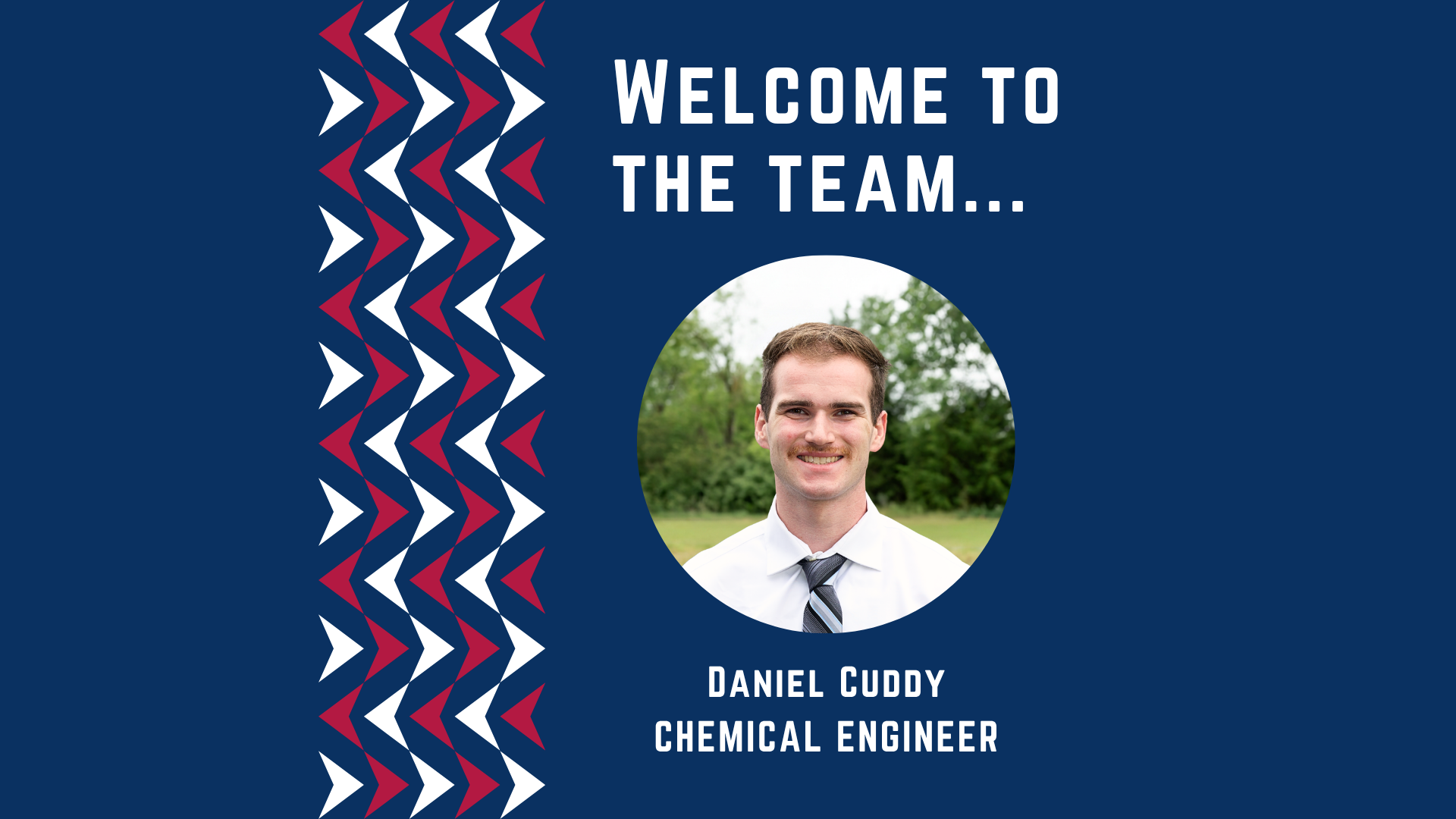
Meet Daniel Cuddy, our new powerhouse on-site Chemical Engineer in Parsons, Kansas! From cutting-edge naval energetics to complex biomanufacturing, he is taking advanced formulas straight to the factory floor to supercharge the Arsenal of Democracy!
08/12/2026


Copyright © 2026 Supply Energetics All Rights Reserved.
Discover
Copyright © 2026 Supply Energetics All Rights Reserved.



 Contact Us