News
03/19/2026

Courtney Owens
Industrial Safety
On October 23, 2025, a series of catastrophic explosions ripped through the Accurate Energetic Systems (AES) facility in McEwen, Tennessee. The incident, which occurred during the manufacturing of detonating cords, resulted in multiple fatalities.
This month, the U.S. Chemical Safety Board (CSB) released a critical update to their investigation. While the final report is pending, the immediate takeaway for the energetics industrial base is irrefutable: The status quo of "Artisan Risk" has become a strategic liability.
The CSB investigation is focusing on two primary areas: Process Safety Management (PSM) and the design of the equipment used in the manufacturing of PETN-based detonating cords.
PETN (Pentaerythritol Tetranitrate) is one of the most powerful and sensitive high explosives in the inventory. When a process involves a high-sensitivity molecule, the "Safety First" slogan must be replaced by Automation by Mandate.
The goal of 21st-century manufacturing must be Zero-Occupancy in the hazardous zones.
The "Arsenal of Freedom" cannot be resilient if it isn't safe. Every tragedy like the one in McEwen isn't just a loss of life-it’s a disruptive ripple through the entire national security supply chain.
We must move away from the massive, centralized "batch" plants of the 1940s toward a model of diversified, decentralized nodes that are designed for containment.
The CSB update is more than a report; it is a mandate. We owe it to the specialized workforce and the warfighter to eliminate "Artisan Risk" and build a North American Chemical Shield that is as safe as it is sovereign.
News
Our latest milestone reinforces our commitment to safeguarding UK data, mitigating digital risks, and maintaining the highest standards of cybersecurity.
10/08/2026
News
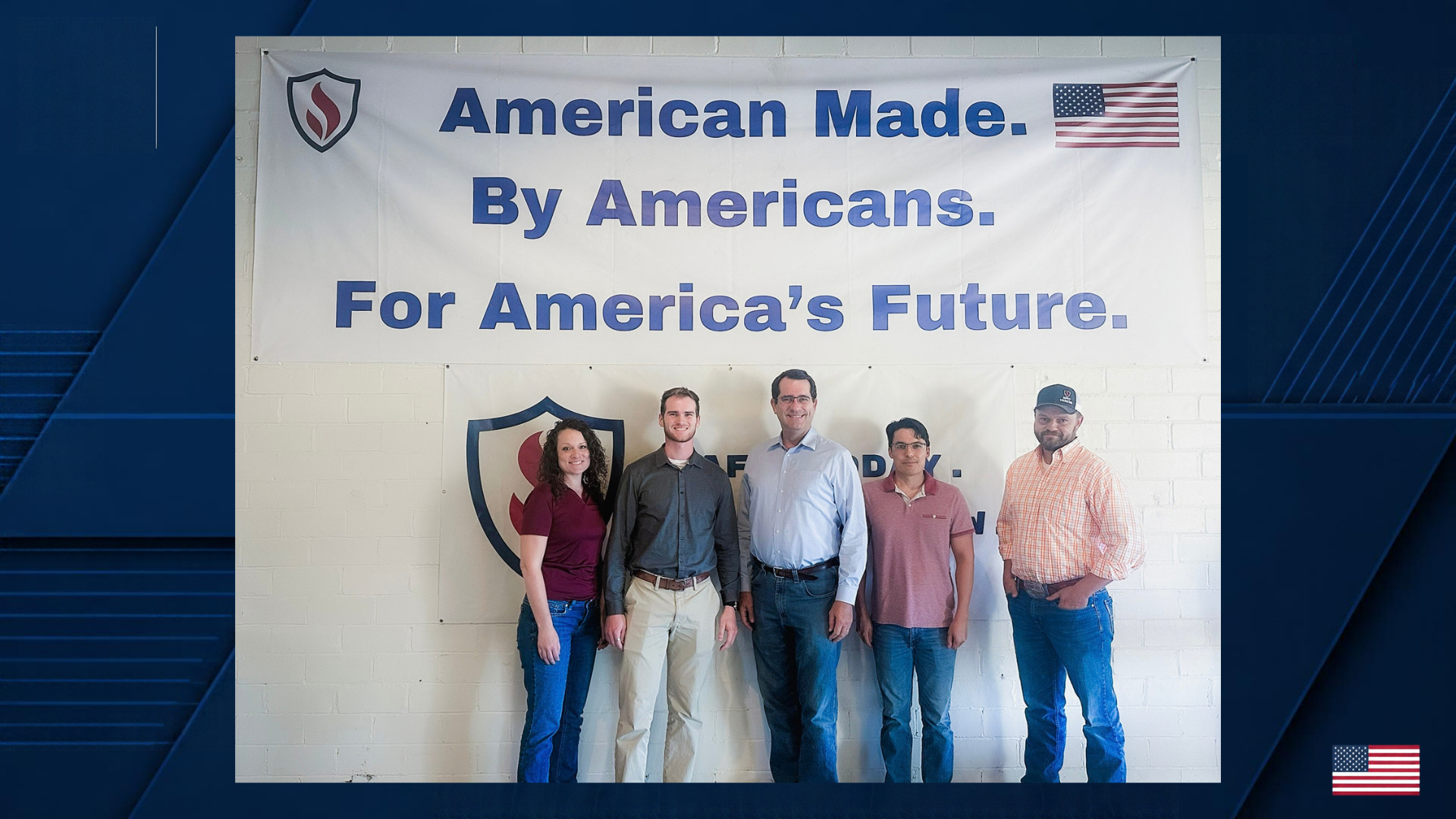
Supply Energetics recently hosted Congressman Derek Schmidt at our Parsons, Kansas facility to showcase our commitment to American-made manufacturing and local job growth. Read more about the visit.
10/07/2026

Intel
President Trump announced that 18 munition plants are currently under construction across the U.S. Here is a look at the key facility projects, missile integration plants, and artillery foundries scaling up production.
09/28/2026


Copyright © 2026 Supply Energetics All Rights Reserved.
Discover
Copyright © 2026 Supply Energetics All Rights Reserved.



 Contact Us