The Lab
03/05/2026

Patrick McNeill
Industrial Modernization
To understand why the global munitions supply chain is struggling to scale despite record funding, you have to look at the chemistry. We are currently witnessing a massive industrial transition from mid-20th-century "Batch" processing to 21st-century "Continuous Flow" nitration.
For decades, the production of nitrocellulose (NC) and other energetic esters has relied on an architecture built for a different era. As the demand for 155mm artillery and solid rocket motors reaches unprecedented levels, the limitations of that legacy architecture have become a matter of national security.
Batch Processing (The Legacy Standard) In a batch plant, energetics are made in large, individual vats. Reactants are added, mixed, and processed as a single "lot."
Continuous Flow (The Modern Mandate) In continuous flow chemistry, reactants are pumped through narrow, precisely controlled microreactors or tubes. The chemical reaction happens as the material moves through the system.
The transition to flow chemistry is no longer theoretical-it is being operationalized by the world's most advanced defense producers.
You cannot surge a 1940s batch plant without increasing risk exponentially. The "factories of the future" aren't just defined by their size, but by their chemical architecture. By moving to distributed, continuous-flow manufacturing, the industrial base can finally achieve the safety, purity, and "always-on" resilience required for modern defense.

News
Our latest milestone reinforces our commitment to safeguarding UK data, mitigating digital risks, and maintaining the highest standards of cybersecurity.
10/08/2026
News
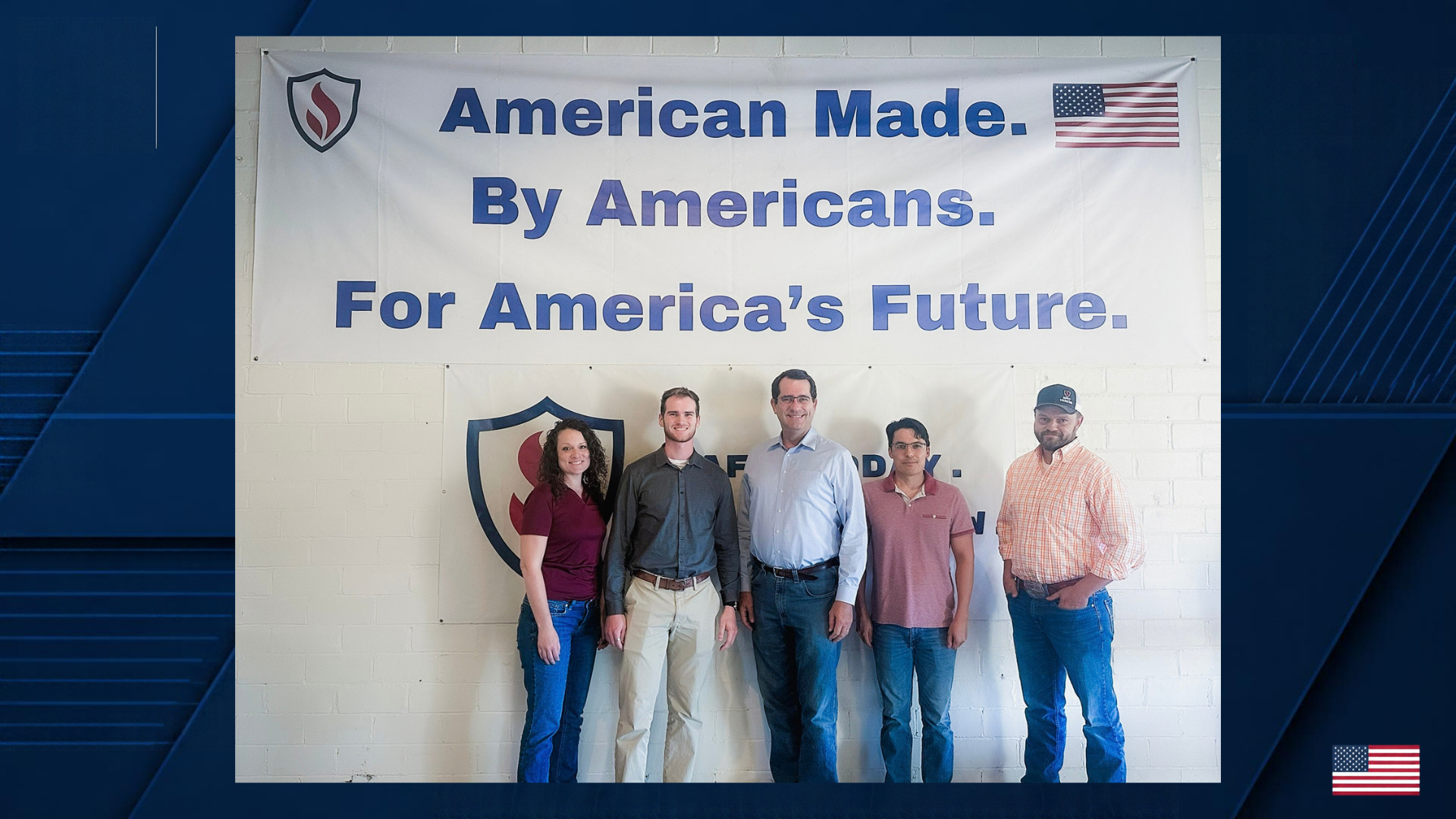
Supply Energetics recently hosted Congressman Derek Schmidt at our Parsons, Kansas facility to showcase our commitment to American-made manufacturing and local job growth. Read more about the visit.
10/07/2026

Intel
President Trump announced that 18 munition plants are currently under construction across the U.S. Here is a look at the key facility projects, missile integration plants, and artillery foundries scaling up production.
09/28/2026


Copyright © 2026 Supply Energetics All Rights Reserved.
Discover
Copyright © 2026 Supply Energetics All Rights Reserved.



 Contact Us