News
06/10/2026

Courtney Owens
Radford RPF Amendments
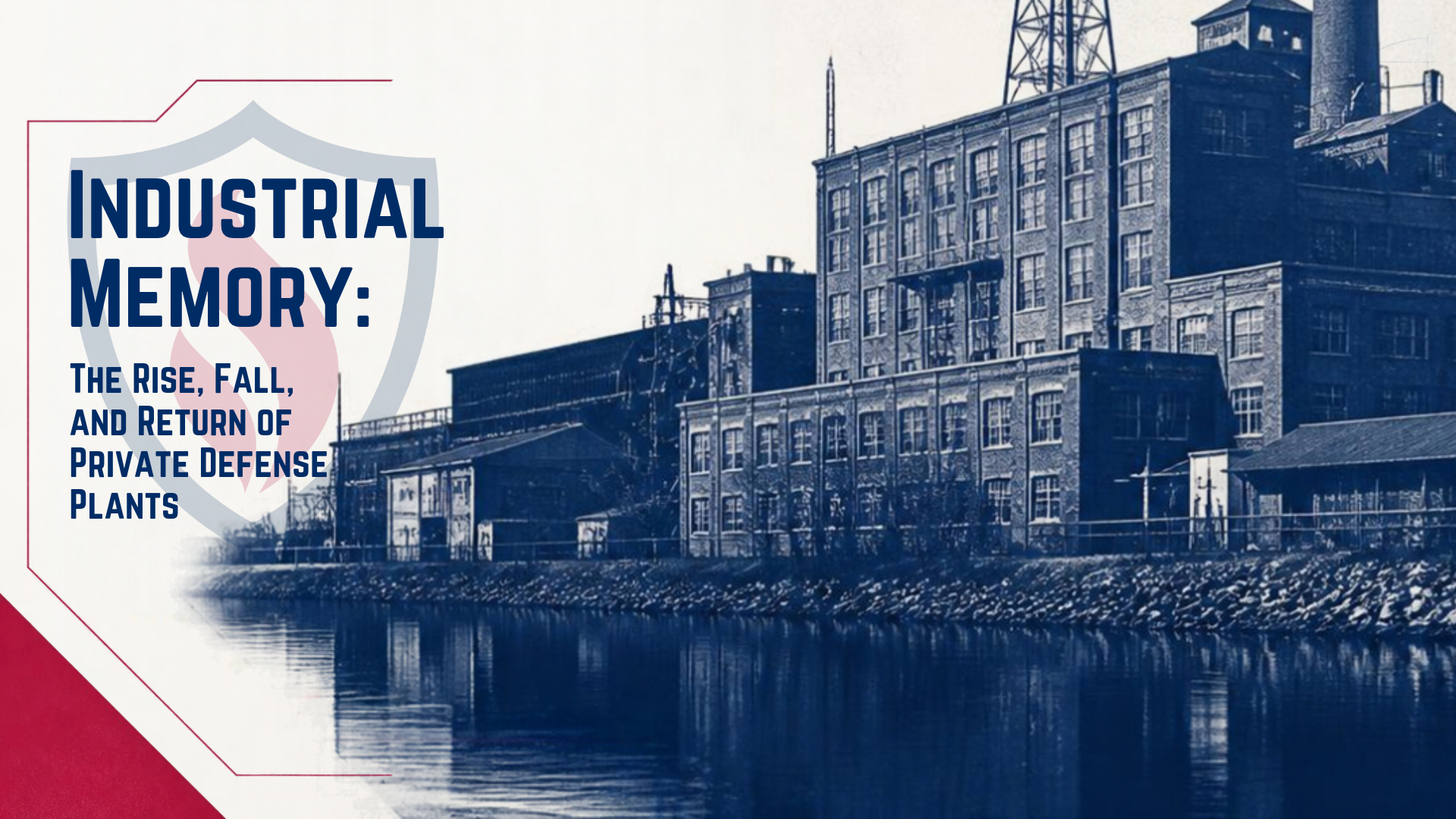
The U.S. Army recently dropped its highly anticipated Request for Proposal (RFP) updates for the management and operation of the Radford Army Ammunition Plant (RFAAP). For the uninitiated, Radford is the historic heart of America’s domestic military nitrocellulose (NC) and propellant production.
A deal this size sets the trajectory for the entire U.S. munitions industrial base. We’ve combed through the newly released FAQs, bidder queries, and government clarifications to bring you the "cliff notes" on this staggering procurement-and what it means for the broader defense ecosystem.
Here is what you need to know.
Let’s start with the headline number: $20,144,020,112.00. The contract carries a staggering $20 billion ceiling, encompassing standard operations, modernization task orders, and facility resets. The initial performance window is 10 years, but the government retains a massive option at Year 5 to extend the deal for another decade, potentially locking in a single operator through the 2040s.
In a surprising twist, the U.S. Government (USG) walked back several key protections previously expected by industry bidders:
Perhaps the most telling section of the Q&A focused on the physical state of the facility. Multiple bidders explicitly pointed out that a majority of Radford’s infrastructure pre-dates modern OSHA, environmental, and explosive safety regulations.
In fact, industry experts noted that bringing certain legacy buildings into compliance with modern lightning protection and explosive safety distance rules is physically impossible without tearing them down and completely relocating them. Furthermore, while the Army has digitized available "as-built" blueprints into CAD scans, a reality check remains: not every building on the base actually has an existing schematic.
Environmental cleanup is no longer a secondary priority-it is a legal mandate. Under clause C-13 (Legacy Waste Reduction), the incoming operator must progressively reduce Radford’s existing stockpile of legacy waste-specifically including nitrocellulose fines-by no less than 10% every single year. The ultimate goal is 100% elimination by the end of the initial 10-year term, funded as a direct project by the government.
How do you pitch a twenty-billion-dollar proposal? Out loud, in an hour. The Army is evaluating massive, highly complex technical criteria-including the 10-Year Workload Schedule, Safety Programs, and Utilities Management-via oral presentations and slide decks rather than traditional volumes of text.
Bidders heavily protested, arguing that cramming over 40 technical requirements into an arbitrary 25-slide limit and a 1-hour presentation was insufficient for a contract of this magnitude. The USG didn't budge. Even more intense is the "Gridiron" evaluation format: immediately following the pitch, the government team caucuses for an hour, hands the bidder clarification questions, and gives them exactly one hour to script and present their answers back to the room.
When asked how existing collective bargaining agreements (CBAs) or union representation would be handled during the transition, the Army took a strict, hands-off approach. The USG clarified that honoring, renegotiating, or abolishing union agreements does not involve the Army; those battles are strictly between the Operator and the Union.
The Radford re-bid highlights a structural reality that the defense enterprise can no longer ignore: the legacy, single-source mega-factory model is under immense strain. When a nation's foundational energetics baseline relies on a singular, multi-billion-dollar, pre-regulatory facility, the entire supply chain inherits massive systemic risk. The lack of minimum workload guarantees, combined with severe infrastructure hurdles and environmental liabilities, underscores exactly why the defense industrial base requires agile, privately capitalized alternatives.
To secure the sovereign arsenal, the future cannot just be about maintaining the macro-monopolies of the past. It must include right-sized, modern, and distributed manufacturing footprints that can innovate at pace, absorb surge requirements, and act as a critical operational release valve when the legacy base hits its limits.
Intel
The energetics ecosystem is experiencing its biggest influx of private capital, advanced synthesis, and manufacturing innovation in over half a century.
10/21/2026

The Lab
Learn how a "push-pull" molecule called FOX-7 turned the rules of insensitive munitions upside down.
10/18/2026

Intel
Fresh off the floor at AUSA 2026 in Washington, D.C., here is our synthesis of the conference.
10/15/2026


Copyright © 2026 Supply Energetics All Rights Reserved.
Discover
Copyright © 2026 Supply Energetics All Rights Reserved.



 Contact Us