The Lab
03/26/2026

Anna Tombazzi
Nitrocellulose Safety
Earlier this month, a loud reminder of the volatility of our industry echoed out of Prescott, Wisconsin. Following a nitrocellulose (NC) drum explosion at a manufacturing facility, OSHA proposed $275,000 in penalties, citing "repeat and serious" safety violations.
While the headline focuses on the fine, the real story is about the inherent danger of legacy handling. Whether you are producing nail polish or 155mm artillery propellant, the chemistry of nitrocellulose is indifferent to your end product. It does not forgive.
The primary hazard in nitrocellulose handling isn't usually the material itself—it’s the loss of the wetting agent. NC is typically transported and stored "wet" with alcohol or water to desensitize it.
The moment a drum seal fails, or a container is left open during manual batching, that wetting agent begins to evaporate. What remains is a highly sensitive, dry explosive. In a traditional batch-processing environment, where hundreds of drums may be stored or moved by hand, the "human touch" becomes the single greatest point of failure.
At Supply Energetics, we believe the industry's reliance on manual drum-handling and "shred-and-soak" batch tanks is a legacy vulnerability we can no longer afford. To rebuild a resilient and safe Organic Industrial Base (OIB), we must pivot toward three modern engineering pillars:
Traditional manufacturing requires large "work-in-progress" inventories. Continuous-flow processing, however, ensures that only a minimal amount of energetic material is "active" at any given second. By reducing the volume of material on the floor, we exponentially reduce the potential blast radius of an incident.
If a human doesn't have to open the drum, the human isn't in the line of fire. Our modular rigs are designed for automated fluid processing. By using real-time manufacturing sensors to monitor "Acid-to-Cellulose" ratios and moisture levels, we can detect a hazard—and neutralize it—before a human even knows it exists.
Safety also starts with the raw material. By working with BioMADE to develop alternative, bio-based celluloses like nanofibers, we are exploring materials that offer more predictable reaction kinetics than legacy wood pulp. This isn't just a win for the environment; it’s a win for the operator on the floor.
Safety is not an overhead cost or a compliance checkbox; it is a strategic capability. As the U.S. and our NATO allies rush to replenish munitions inventories, we cannot let the urgency of production compromise the safety of our workforce.
The OSHA citation in Wisconsin should be the final prompt we need to stop "managing" legacy risks and start engineering them out of existence.

News
Our latest milestone reinforces our commitment to safeguarding UK data, mitigating digital risks, and maintaining the highest standards of cybersecurity.
10/08/2026
News
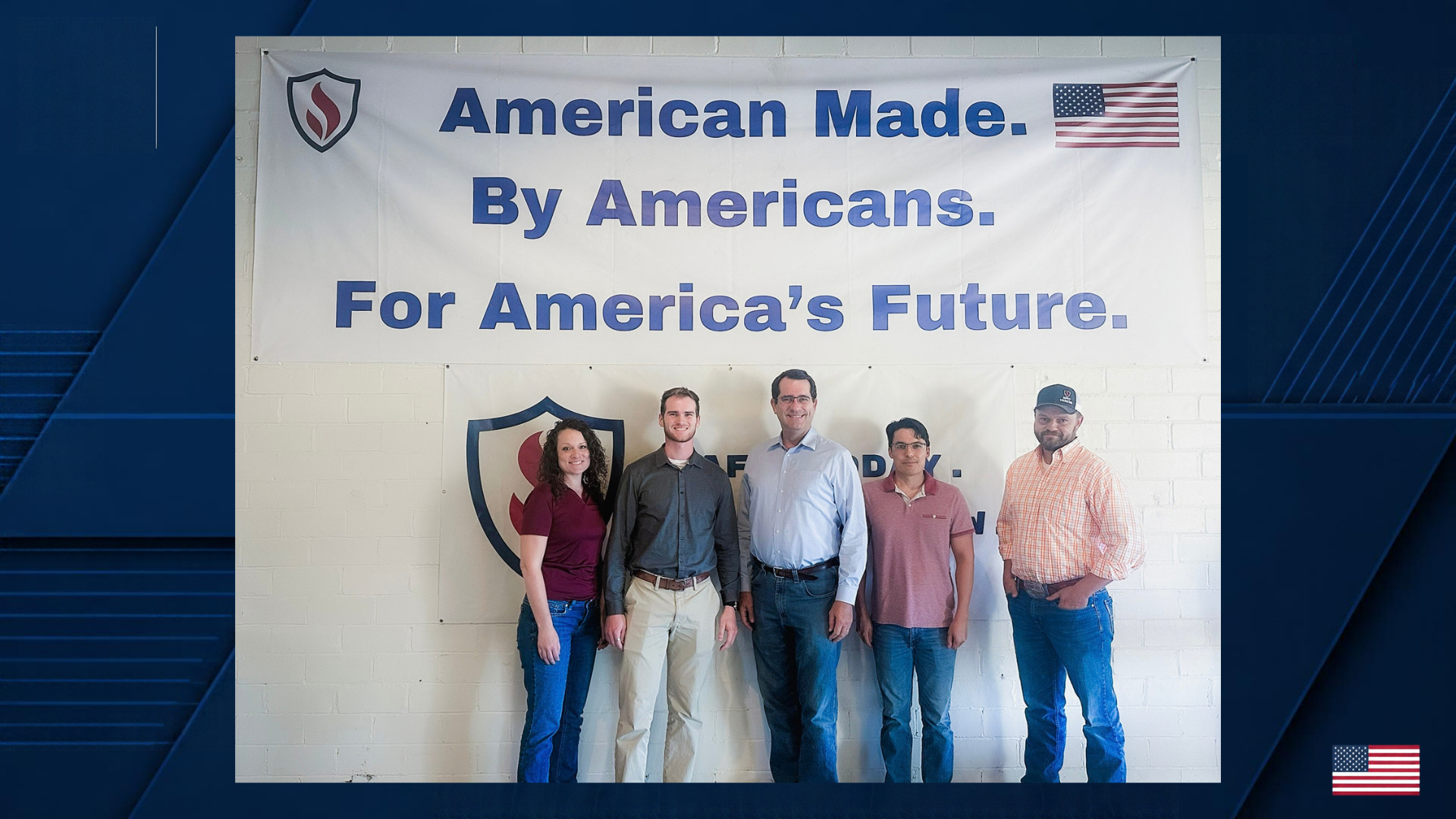
Supply Energetics recently hosted Congressman Derek Schmidt at our Parsons, Kansas facility to showcase our commitment to American-made manufacturing and local job growth. Read more about the visit.
10/07/2026

Intel
President Trump announced that 18 munition plants are currently under construction across the U.S. Here is a look at the key facility projects, missile integration plants, and artillery foundries scaling up production.
09/28/2026


Copyright © 2026 Supply Energetics All Rights Reserved.
Discover
Copyright © 2026 Supply Energetics All Rights Reserved.



 Contact Us