The Lab
02/02/2026

Anna Tombazzi
Technical Expertise
In the world of energetics, "close enough" doesn't exist. For a nitrocellulose producer like Supply Energetics, the difference between a successful contract and a rejected lot often comes down to a single document: MIL-DTL-244C.
If you have ever wondered what separates commercial-grade cellulose from the material that powers the US military, this standard is the answer.
Simply put, MIL-DTL-244C is the "Detail Specification" that governs the quality, testing, and acceptance of nitrocellulose (NC) for use in propellants and combustible cases.
For us as producers, it is not just a guideline-it is the law. It defines everything from the allowable nitrogen percentage (para 3.4.1) to the physical stability of the fibers (para 3.4.3). If our product doesn't meet the requirements listed in the "Table of Doom"-specifically the stringent parameters for properties like Acetone Insolubles (3.4.4) or Oil and Grease Content (3.4.8)-it cannot be used in US military ammunition.
While the spec covers multiple grades, the industry revolves around the first three. The primary difference is the Nitrogen Content, which dictates the "energy" of the material:
Compliance with MIL-DTL-244C requires a specialized laboratory. Based on the test methods referenced in the standard, here is the hardware you will typically find in a MIL-SPEC NC lab:
1. The Nitrometer (for Nitrogen Content - Method 4.5.1) You cannot measure "bang" with a ruler. We use a specific titration setup to measure the exact percentage of nitrogen by weight. This is the single most critical quality metric.
2. The Falling Ball Viscometer (for Viscosity - Method 4.5.5) MIL-DTL-244C requires precise viscosity readings. We dissolve the NC in a solvent and measure how long it takes for a steel ball to fall through the solution. This determines the molecular weight and how the propellant will flow during manufacturing.
3. The Stability Block (for Heat Tests - Method 4.5.3) NC is inherently unstable. To ensure it won't degrade in storage, we use tests like the Bergmann-Junk or Methyl Violet Heat Test. These involve heating a sample in a specialized block and measuring the nitrous vapors released.
The shift from MIL-N-244 to MIL-DTL-244C represents the modernization of the US defense supply chain.
For Supply Energetics, adhering to Revision C means we aren't just making chemicals; we are delivering a precision component that ensures the safety and reliability of the warfighter.
News
Our latest milestone reinforces our commitment to safeguarding UK data, mitigating digital risks, and maintaining the highest standards of cybersecurity.
10/08/2026
News
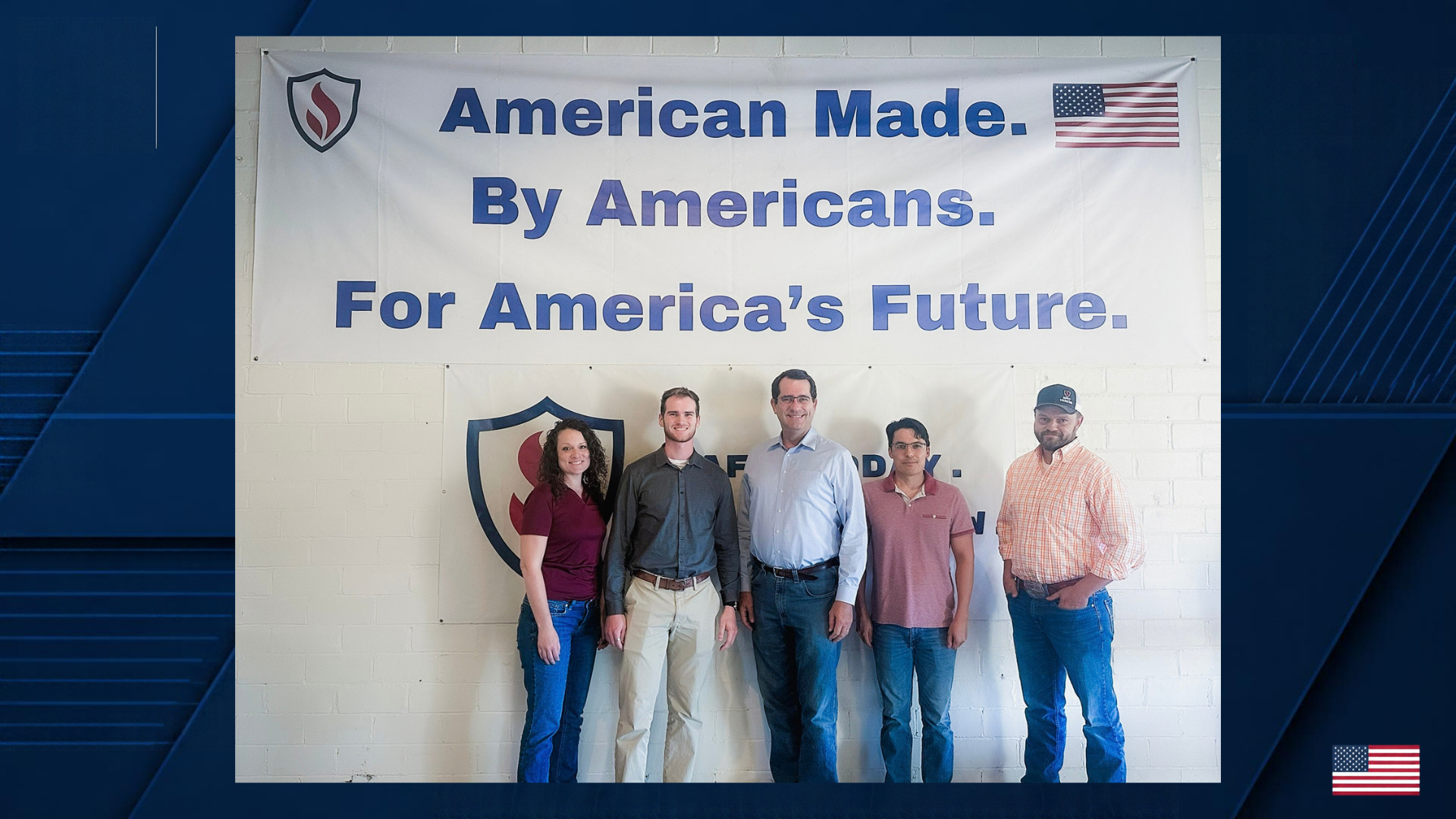
Supply Energetics recently hosted Congressman Derek Schmidt at our Parsons, Kansas facility to showcase our commitment to American-made manufacturing and local job growth. Read more about the visit.
10/07/2026

Intel
President Trump announced that 18 munition plants are currently under construction across the U.S. Here is a look at the key facility projects, missile integration plants, and artillery foundries scaling up production.
09/28/2026


Copyright © 2026 Supply Energetics All Rights Reserved.
Discover
Copyright © 2026 Supply Energetics All Rights Reserved.



 Contact Us